Release notes are operational guidance for people who carry pager risk. Software teams often treat them as a marketing chore or a list of Jira tickets, yet for the developer integrating the code, these notes are a risk-assessment tool. Trust does not come from a predictable publishing schedule. Trust comes from the specific disclosure of impact, security, and migration cost.
Short answer: Release notes that developers trust identify impact before hype and isolate breaking changes from additive features. They must tie every change to a versioned release artifact and provide a clear technical path for migration. Modern standards such as Keep a Changelog and Semantic Versioning provide the structure, but trust requires editorial judgment to explain why a change matters to the system's stability.
Release notes are separate from launch announcements
Launch announcements explain why a product matters to the market. Release notes explain what changed in the binary and who gets affected. I separate these documents because they serve different cognitive modes. A developer reading release notes is usually triaging an upgrade or debugging a regression. They need a queryable record, not a narrative.
GitHub's about releases documentation defines releases as versioned artifacts. These artifacts map to tags and assets. Keep a Changelog argues that changelogs are for humans, not machines, which means the entries need to be grouped by type: Added, Changed, Deprecated, Removed, Fixed, and Security.
I have seen teams flood their notes with "improved performance" filler while a breaking API change sits buried in a list of refactors. Once a developer misses a critical change because the notes were padded with marketing adjectives, they stop reading. Trust is a cumulative asset that teams burn through every time they prioritize hype over consequence.
The first screen must quantify upgrade risk
A developer opening a release note is performing a risk-reward calculation. They need to know if the merge is safe. I recommend an opening block that provides four specific fields before any prose begins.
- Release version and date.
- One-sentence summary of the release intent.
- A dedicated "Breaking Changes" section that explicitly says "None" when true.
- Links to migration docs or rollback procedures.
Stripe's changelog follows this pattern by tying entries to specific API versions. GitHub's automatically generated release notes also assume a structured category model. Structure allows for scanning, which is the primary way engineers consume technical updates under pressure.
Explicitly stating "No breaking changes" is a trust signal. Silence creates ambiguity. A reader should not have to guess that an upgrade is safe because they didn't see a warning.
Category discipline reduces the cost of scanning
Keep a Changelog categories exist to map changes to risk profiles. Added and Changed items are usually safe. Deprecated, Removed, and Fixed items require attention. Security items require immediate action.
I wrote about changelog structure in How to Write a Changelog That Developers Actually Read, but release notes take this a step further by focusing on the immediate release. I use a mental filter to check every bullet point before publication.
- Does this describe a change in runtime behavior, build behavior, or only internal tooling?
- Does the reader need to take action before or after upgrading?
- Is the risk level tied to a removal, a default change, or a new limit?
"Updated authentication middleware" is a weak bullet. "Default token expiry reduced from 24 hours to 1 hour; update refresh logic before upgrading to prevent session drops" is a trust-building bullet. One describes the work. The other describes the consequence.
Security disclosure is the highest form of trust
Security notes are the most critical part of the document. Modern standards have moved security from a footnote to a primary section. Trust here requires total transparency, including CVE IDs and impact assessments.
I look at how Kubernetes handles release notes for examples of ecosystem-scale disclosure. They push readers toward searchable notes because large systems cannot rely on memory. Inclusion of a CVE (Common Vulnerabilities and Exposures) ID directly in the note allows security teams to cross-reference the fix with their own scanners.
New regulations make this transparency a legal requirement. The EU Cyber Resilience Act (2025) mandates vulnerability management and secure-by-default development for digital products. Public companies in the US must also navigate the SEC 4-Day Rule, which requires disclosing material cybersecurity incidents within four business days via Form 8-K. Release notes have become part of the legal record of a company’s security posture.
I also see a trend toward including a Software Bill of Materials (SBOM) with each release. An SBOM acts as a nested list of ingredients for the software, allowing users to verify the security of every dependency. Providing an SBOM link in the release notes is a signal that the team takes supply-chain security seriously.
Breaking changes need an exhaustive disclosure standard
GitHub supports custom categories for release configuration via .github/release.yml. This allows teams to isolate high-risk items automatically. I think teams still underwrite trust here by using euphemisms.
"Behavior adjustment" is a euphemism for a breaking change. "Important update" is a euphemism for a breaking change. Product teams often prefer softer language to avoid scaring users, but engineers find this evasive. I prefer strong, clear labels. A breaking change note must answer five questions.
- What changed exactly?
- Which specific versions or configurations are affected?
- When does the old behavior cease to function?
- What is the precise migration step to fix it?
- Where is the long-form migration guide?
Surprise is the enemy of trust. Developers can forgive a difficult migration if they were given the information needed to plan for it. They rarely forgive a surprise breakage caused by vague documentation.
Automation is a starting point, not a final product
GitHub's generated notes are helpful for pulling pull request titles and contributors into a draft. This saves time on collection, but it does not produce trust-grade notes on its own. A pull request title often reflects the implementation details ("Refactor auth logic") rather than the user impact ("Added support for OIDC providers").
I use automation to collect the facts.
- PR titles and IDs.
- Associated labels.
- Contributor handles.
- Version tags.
I do not use automation for the impact line. That sentence needs a human who understands the customer's environment. A machine can tell you that a dependency was bumped. A writer tells you that the bump fixes a memory leak in high-concurrency environments.
Human-first release notes focus on metrics and use cases
Figma and Vercel have shifted toward "Human-First" release notes. Figma uses categorized tags so developers can filter by workflow, such as "Dev Mode" or "Prototyping." Vercel and Raycast focus on performance metrics rather than generic adjectives.
"Improved API speed" is a claim. "Reduced API response time by 35% for datasets over 1MB" is a fact. Developers trust facts. When you quantify the improvement, you provide the engineer with the data they need to justify the upgrade to their own stakeholders.
I also value visuals when they clarify technical changes. GIFs are useful for UI updates, but code blocks are essential for API changes. A release note that shows the "Before" and "After" code for a breaking change reduces the mental load of the migration.
Release notes reflect a team's empathy for the operator
Commercial consequences follow this distinction. Release notes are often the only recurring technical communication a user receives from a company after the initial sale. If those notes are vague or promotional, the user assumes the rest of the documentation is also unreliable. Support costs rise as users fail to navigate upgrades.
One of the projects I am frequently asked to lead for DevTools companies is the repair of release communication. The problem usually isn't just the prose. The problem is the internal definition of what a release note is. Once the team views the note as operational guidance for a peer, the quality of the writing improves immediately.
My default release note template
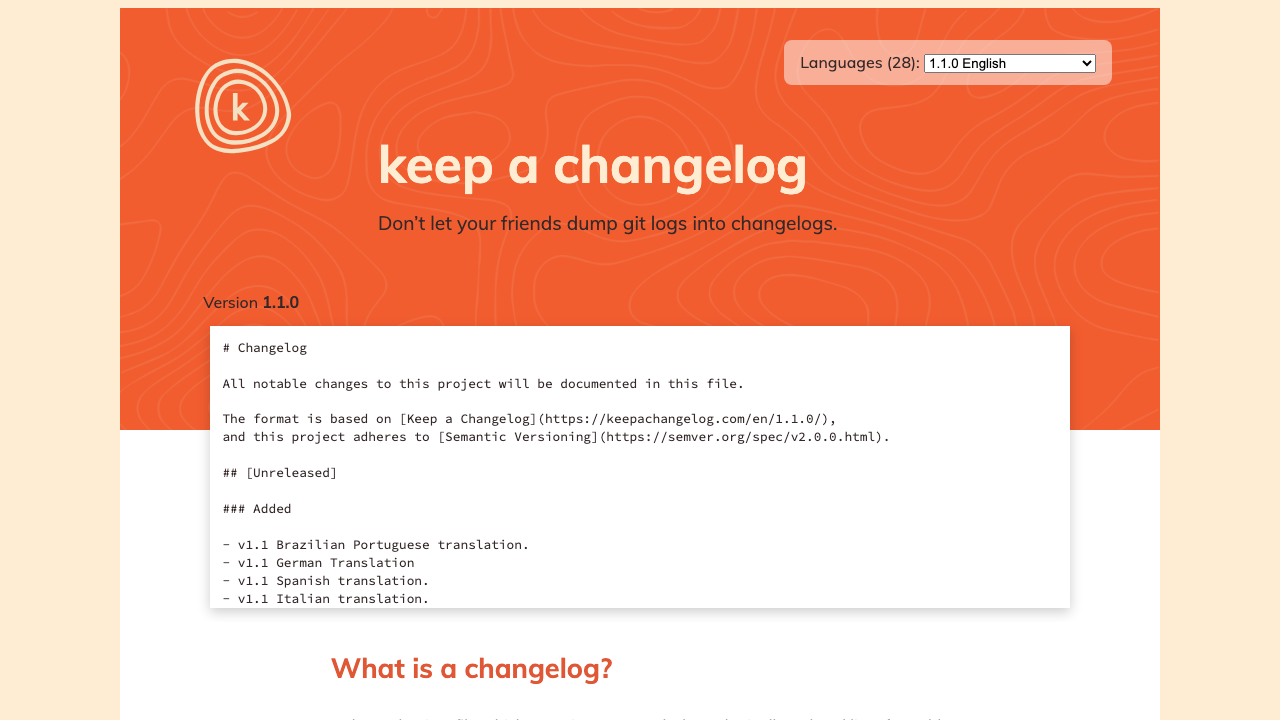
The Keep a Changelog project provides a standard for these categories: Added, Changed, Deprecated, Removed, Fixed, and Security. I follow this standard because it aligns with how developers categorize risk.
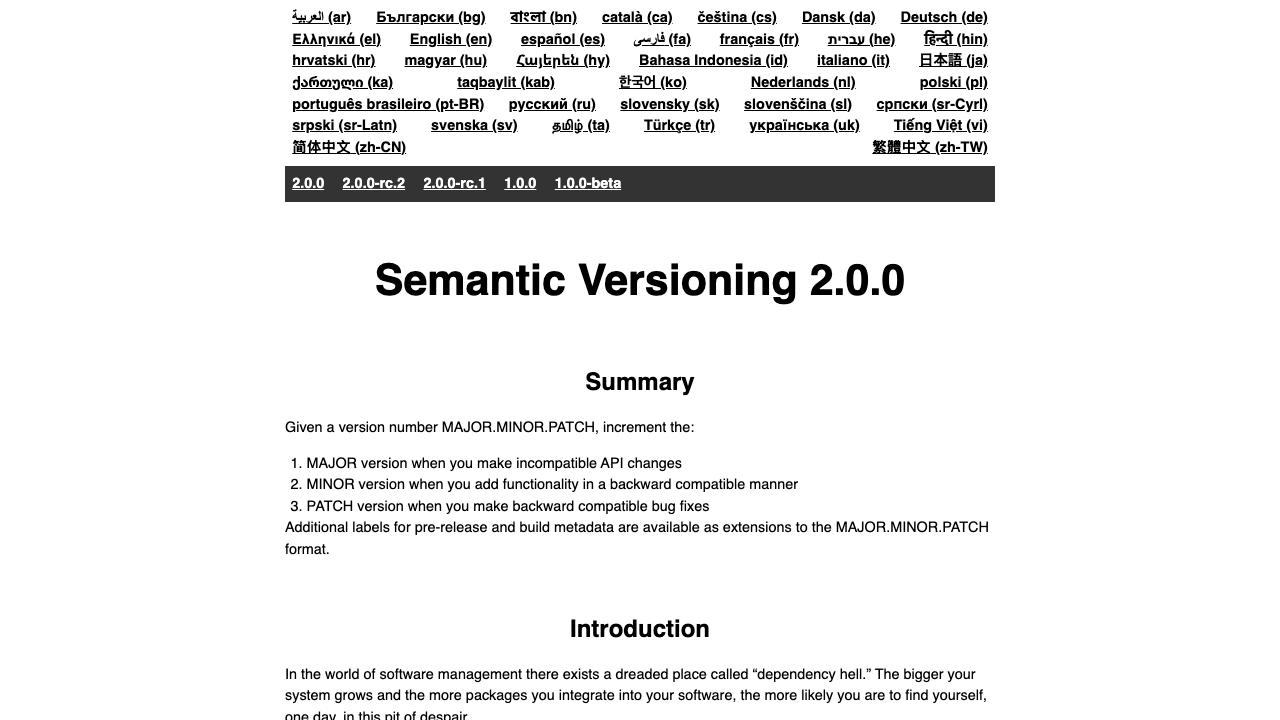
Semantic Versioning (SemVer) adds another layer of communication by encoding the magnitude of change into the version number itself.
I use a four-layer hierarchy for release notes prioritization:
| Field | Requirement |
|---|---|
| Version and Date | Linked to the Git tag |
| Executive Summary | One sentence on why this version exists |
| Breaking Changes | Explicit list with migration links |
| Security Fixes | Must include CVE IDs and severity |
| Added Features | Focused on new capabilities, not internal refactors |
| Deprecations | Warnings for future removals |
| Action Required | Clear instructions on what to do next |
This format works for SDKs, APIs, and CLI tools. It forces the writer to confront the "Action Required" field, which is often what developers are looking for first.
FAQ
What is the difference between a changelog and release notes?
A changelog is a chronological record of every change made to the project. Release notes are a curated, reader-focused explanation of a specific version's impact. A changelog is the "what," while release notes are the "so what."
Should I include every bug fix in the release notes?
No. I exclude minor internal refactors that have no user-visible impact. I include fixes only when the previous incorrect behavior was significant enough for a reader to recognize.
How do I handle security fixes without tipping off attackers?
Follow the standard disclosure process. Release the fix first, then publish the detailed security note with the CVE ID once the majority of users have had a chance to upgrade. Precision is more important than speed in the disclosure text itself.
Is Semantic Versioning required for trust?
SemVer is a powerful tool for communicating risk. If you use it, you must follow it strictly. Breaking the SemVer contract by introducing a breaking change in a patch release destroys trust faster than having no versioning system at all.
What is the most common mistake in release notes?
Prioritizing the "Added" section over the "Breaking Changes" or "Security" sections. Marketing teams want to talk about new features. Developers want to talk about what might break their production environment. Trust is built by prioritizing the developer's needs.