Technical documentation is the single greatest force multiplier for engineering velocity. While most teams treat writing as a secondary administrative task, DORA research (Accelerate) confirms that high-quality documentation makes a team 2.4x more likely to achieve elite software delivery performance. The impact is non-linear: technical practices like Continuous Integration provide a 34% performance lift with poor documentation, but that lift surges to 750% when supported by high-quality technical writing. Documentation is not a "clarity" exercise; it is a systemic optimization for engineering throughput.
Short answer: Documentation acts as a force multiplier for every other technical capability in an engineering organization. High-quality documentation reduces "Lead Time for Changes" by minimizing the time spent in discovery and reduces "Time to Restore Service" by externalizing tribal knowledge into a searchable, reliable format. Organizations that invest in documentation maturity see a 19% increase in developer productivity and a 70% boost in overall engineering throughput.
The structural drag of documentation debt
Engineering teams frequently prioritize code-level technical debt over documentation debt because the former triggers immediate build failures. Documentation debt is more insidious. It accumulates as a "silent tax" on every Pull Request, every onboarding cycle, and every production incident.
A Stripe survey found that developers spend an average of 17 hours per week on technical debt and maintenance. Poor documentation is cited as a primary friction point in this calculation. When information is unstated or buried in ephemeral Slack threads, the cost of discovery becomes linear with the size of the team. In an undocumented system, a team of 100 engineers is not 10x more productive than a team of 10; they are often less productive because the communication overhead of maintaining tribal knowledge consumes the surplus capacity.
McKinsey research on "Tech Equity" confirms that companies with significant documentation gaps take 18% longer to release new features. This delay is not caused by slow typing; it is caused by the "discovery latency" required to understand undocumented dependencies and side effects.
DORA metrics as a documentation benchmark
The DevOps Research and Assessment (DORA) team has spent nearly a decade identifying the capabilities that drive software delivery and operational (SDO) performance. Their findings consistently place documentation at the center of the performance web.
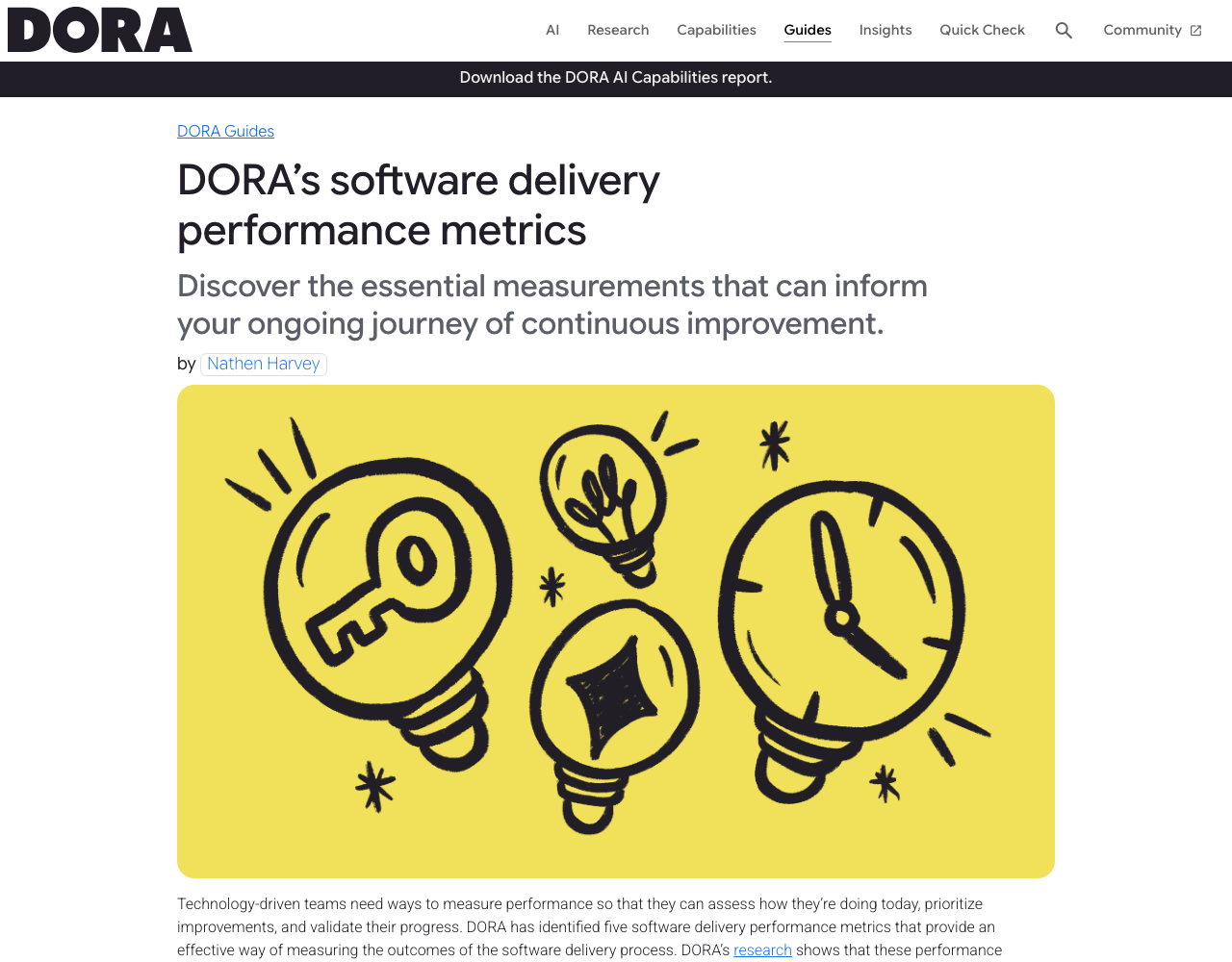
Elite performers use documentation to amplify other capabilities. For example, the performance lift from trunk-based development increases from 36% to over 1500% when supported by high-quality docs. This is because trunk-based development requires rapid context sharing and high-frequency commits, both of which break down if engineers have to wait for a "knowledge silo" owner to wake up in a different time zone.
| Metric | Impact of High-Quality Documentation |
|---|---|
| Software Delivery Performance | 2.4x more likely to be an elite performer |
| Security Integration | 3.8x higher success rate |
| Cloud Leverage | 2.5x more effectively utilized |
| Organizational Performance | 25% higher relative to low-doc peers |
Knowledge silos and the linear decay of throughput
A knowledge silo is an undocumented architectural detail that lives only in one engineer's head. Silos are the primary bottleneck in the modern engineering pipeline.
Throughput capacity is limited by the slowest component of the system. If your deployment pipeline takes 10 minutes, but understanding the "Auth Service" dependencies takes 4 hours of Slack interrogation, your true velocity is capped by the lack of documentation. Initiatives focused on intentional knowledge sharing—such as Architecture Decision Records (ADRs)—have been shown to boost engineering throughput by nearly 70%.
GitHub's State of the Octoverse reports consistently show that high-quality documentation can increase developer productivity by 50%. This productivity gain comes from the decentralization of truth. When the documentation is the source of truth, the "Bus Factor" of any individual component becomes secondary to the reliability of the written spec.

Quantifying the context switching tax
Context switching is the most expensive operation in engineering. Every time an engineer leaves their IDE to search for an answer in Slack, Jira, or a 404ing wiki, they incur a "cognitive restart" cost.
High-quality documentation minimizes this tax by providing answers at the point of need. This is why "Documentation as Code"—where docs live in the same repository as the source code—is so effective. It keeps the engineer in the "Flow State" by reducing the distance between the question and the answer. According to Stack Overflow data, 48% of developers experience weekly productivity issues specifically due to knowledge silos and the resulting context switches.
The documentation-as-capability framework
Google Cloud's Architecture Framework identifies documentation not as a support asset, but as a core operational capability.
To achieve velocity gains, DORA research identifies eight key attributes of high-quality documentation that must be met:
- Clarity: Easy to understand for the intended audience.
- Findability: Answers are discoverable in under 60 seconds.
- Reliability: The information is technically accurate.
- Updateability: The friction to revise a doc is lower than the friction to ignore it.
- Relevance: Content is directly applicable to current workflows.
- Completeness: The entire public surface area is covered.
- Organization: Following structured frameworks like Diátaxis.
- Accessibility: Available to all stakeholders without permission silos.
Economic outcomes of documentation maturity
The ROI of technical writing is often questioned by finance teams because it is a "soft" cost. However, the economic outcomes are quantifiable.
Support ticket deflection
High-quality documentation is a defensive asset. By reducing the documentation-to-support ratio, you allow your senior engineers to spend more time on high-leverage architectural work and less time on repetitive "how-to" questions. This is a direct shift from Opex (maintenance) to Capex (new feature value).
Onboarding velocity
The "Time to First Commit" for a new hire is a leading indicator of organizational health. Teams with elite documentation reduce this time by 40-60%. In a competitive hiring market, the ability to make a new engineer productive in their first week is a massive economic advantage.
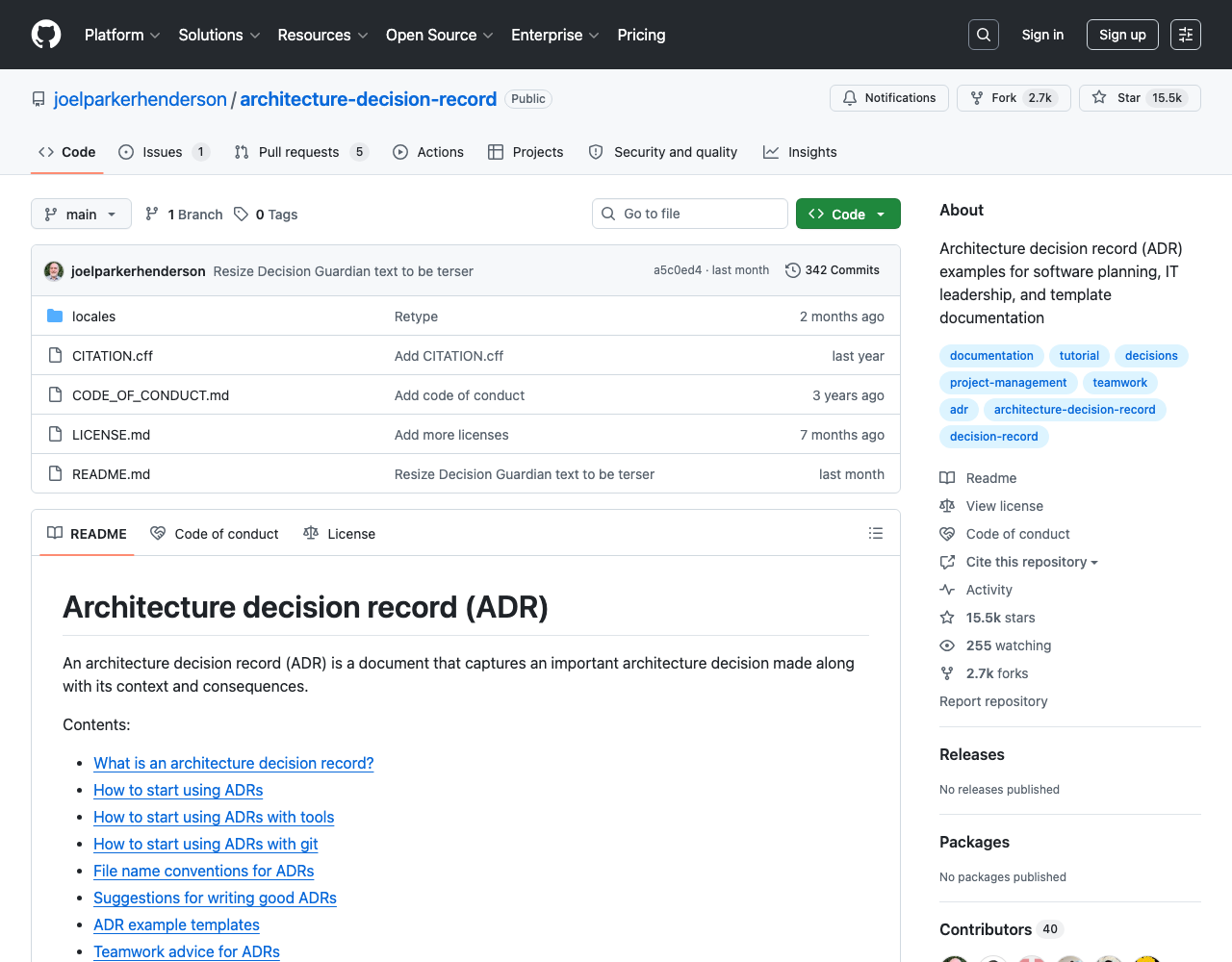
ADRs are a high-signal example of "Practitioner Writing" that outranks standard wikis. They document the "Why" behind a decision, preventing future engineers from refactoring a "bug" that was actually an intentional architectural trade-off.
Engineering documentation as infrastructure
Information architecture is the primary competitive moat for developer-first companies in 2026. Technical practitioners reward teams that integrate writing into the product roadmap.
Low implementation friction turns a technical blog into infrastructure. Deep practitioner writing becomes a permanent part of the trusted toolkit. Useful content remains relevant because it provides immediate utility to the reader.
FAQ
How do we measure "documentation quality" objectively? Use the DORA attributes as a scorecard. Survey your engineers on "Time to Find Answer" and "Reliability of Source." Correlate these scores with your DORA velocity metrics (Lead Time and Change Failure Rate).
Is "Documentation as Code" required for these gains? It is the most reliable way to ensure documentation stays current. By treating docs like code—with PR reviews, linting, and automated testing—you reduce the "Updateability" friction that causes traditional wikis to rot.
Should engineers write all the documentation? No. Technical writers provide the structural expertise and editorial discipline. However, engineers must own the "Primary Source" truth. The most effective teams use a hybrid model where engineers draft the technical core and writers optimize for clarity, findability, and the Diátaxis framework.
What is the "Bus Factor" impact of documentation? Documentation effectively raises the Bus Factor by decentralizing tribal knowledge. If the only person who knows how the payment gateway works leaves the company, and there is no documentation, your Bus Factor is 1. High-quality docs move that knowledge from a person to the organization.
Does AI-generated documentation help velocity? Only if it is verified by a human practitioner. AI can help with boilerplate, but the "Nonsense Detector" of technical readers is highly sensitive to the hallucinated details often found in raw AI output. Trust is built on accuracy, not volume.