DevTools startups lose deals over bad docs long before anyone writes "documentation" into a CRM field. A buyer hits a dead quickstart, an auth example leaves out a required scope, a pricing-sensitive limit like the free-tier request cap sits buried three pages deep, or the migration path for one breaking change reads as a single vague sentence.
The trial cools off quietly, sales blames timing, and product blames pricing. I think the docs were the real loss point more often than teams want to admit.
Short answer: DevTools buyers use docs as a proxy for product maturity, implementation risk, and post-sale support quality. The 2026 State of Docs report says 80% of decision-makers review documentation before buying, 88% rate docs extremely or somewhat important, and 51% say docs are important or essential for closing deals, yet 57% do not track leads from documentation.
Bad docs lose deals because they create friction exactly where technical buyers evaluate trust: setup speed, API clarity, edge-case disclosure, and upgrade confidence.
Buyers use docs as the product, not the brochure
The State of Docs 2026 purchase and business impact report makes the commercial case more directly than most product teams do internally. Eighty percent of decision-makers review docs before buying.
Eighty-eight percent rate docs extremely or somewhat important. More than half of respondents say docs matter for closing deals, while most teams still do not instrument lead tracking from docs.
What I have seen on technical evaluations lines up with those numbers. When a product is technical enough to change infrastructure, workflows, or how much time a team spends maintaining things, developers skip the marketing site entirely.
They go straight to the docs because the docs answer the uncomfortable questions: how fast can I test this against a throwaway API key, what is hidden behind the first successful request, and what breaks when I move a working call from the sandbox to a production deploy? A buyer evaluating a payments API, for instance, will look for whether test-mode keys behave like live keys before they will trust the product with real card data.
The same report includes operators from Gravitee, Docker, and Stripe describing docs as a sales tool, a developer enablement engine, and even infra. That language matters because it captures the real evaluation path.
Buyers read documentation to judge the product team and solve immediate implementation problems at the same time.
The first broken quickstart can kill the trial
Quickstarts carry more revenue weight than most startups give them. A quickstart is not an onboarding asset in the abstract.
Think of it as a timed exam your product gives to a stranger who has never met your support team: can they paste five commands and see a real response before they lose interest?
Stripe's development quickstart is a good example of what "serious" looks like. It starts with the CLI, shows the exact SDK version used, spells out what the reader will learn, and walks through the first successful request with real commands.
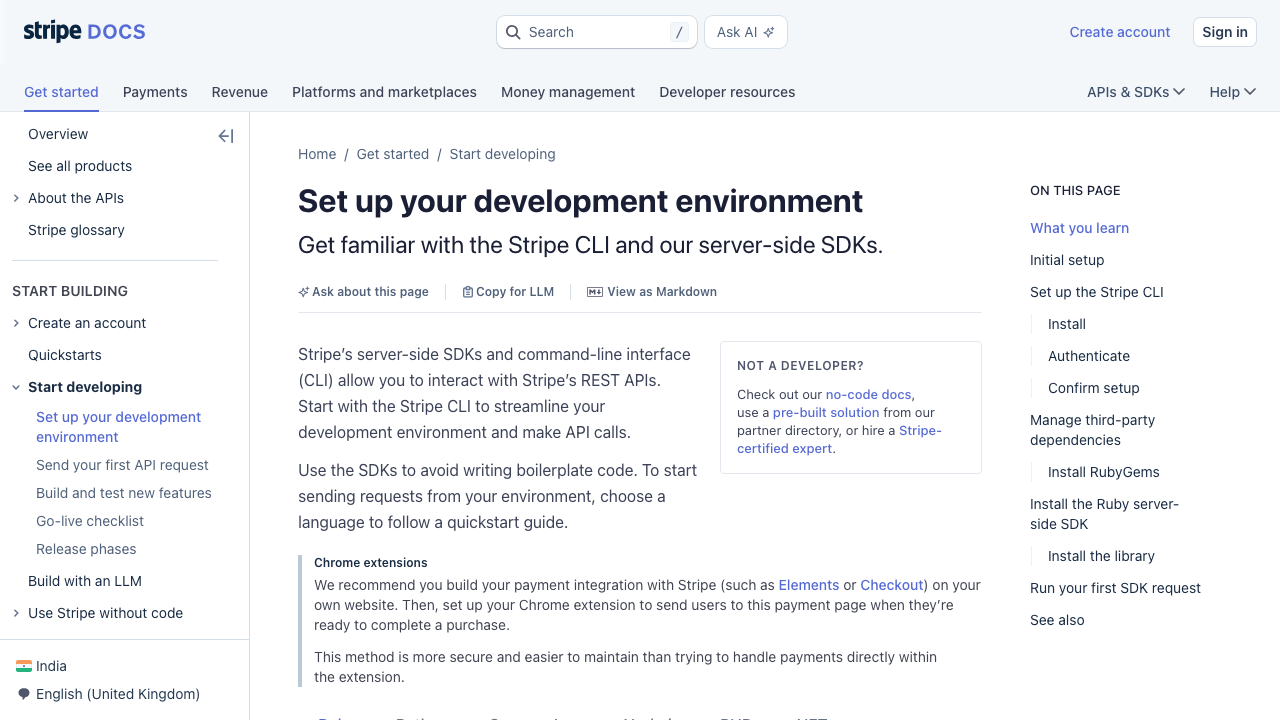
Stripe's quickstart index also makes path selection obvious across different integration shapes.
Vercel's Functions quickstart is much shorter, but it still does the essential job: prerequisites, a working code example, and the next technical steps.
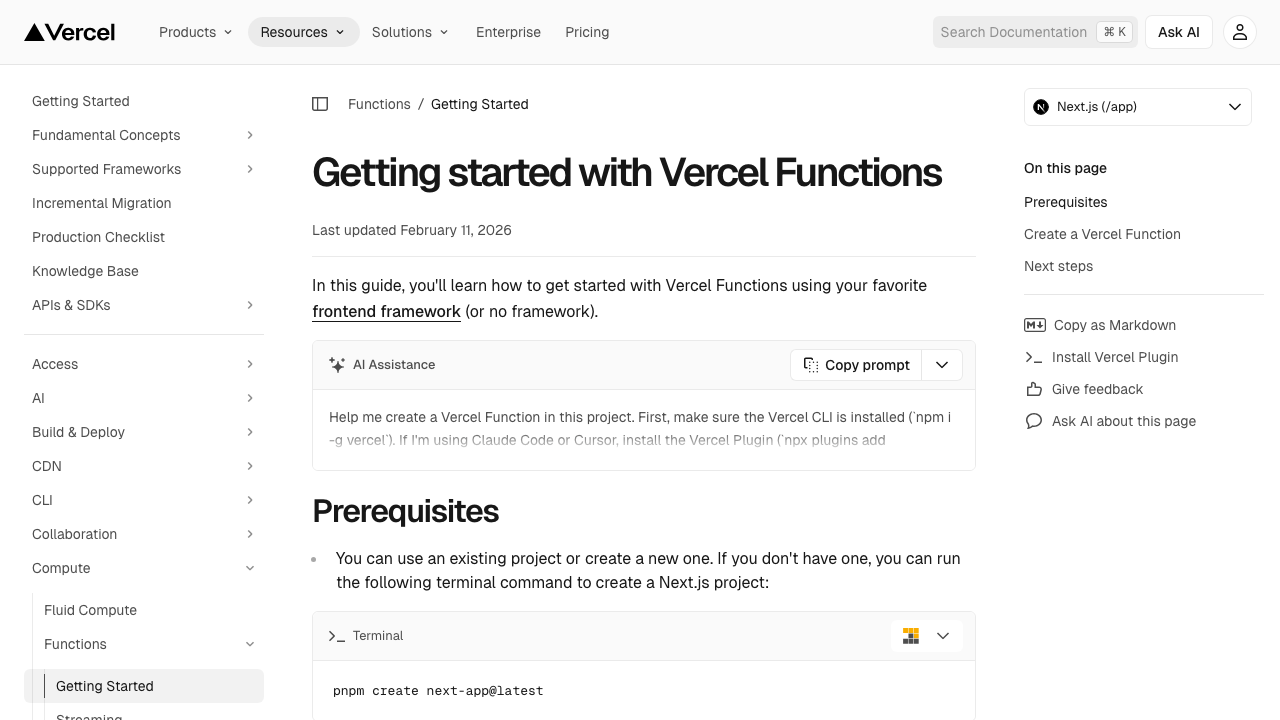
Cloudflare's Workers getting started guide follows the same pattern.
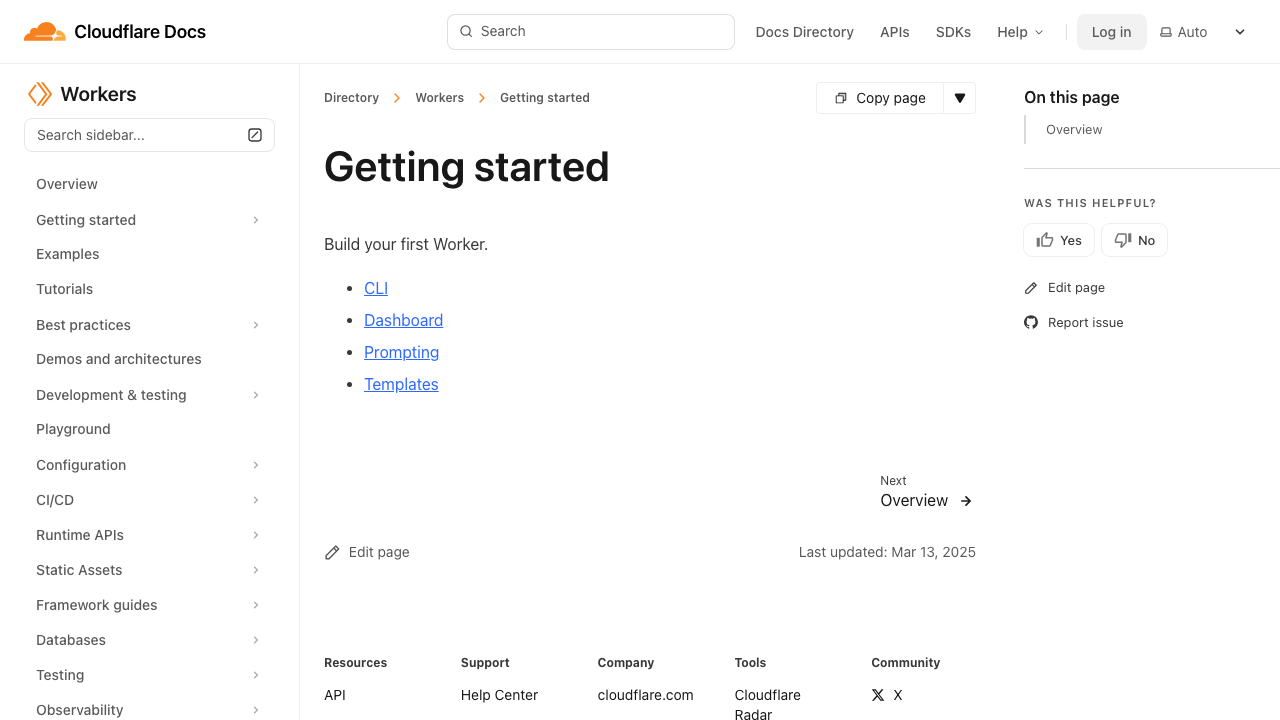
Reducing ambiguity fast is what good quickstarts do. Weak ones force the buyer to improvise the missing steps, like guessing which region flag the deploy command actually needs, and that improvisation is where doubt enters the evaluation.
Engineering teams will shrug off a broken sample because "support can help." That help arrives too late to matter.
Once the evaluator has to open a ticket just to finish the first ten minutes, say because the documented npm install pulls a package version that no longer exports the function in the example, the product feels expensive before procurement ever sees a quote.
Buyers read docs for signs of operational honesty
A polished docs site does not close deals on its own. Honest docs close more deals because they show the team understands the ugly parts of adoption, like the fact that the webhook retry schedule doubles the delay each attempt and can leave events stuck for hours.
Buyers look for questions like these, even if they never state them explicitly:
- Which auth scopes or API keys do I need, exactly?
- What are the rate limits, timeouts, and default quotas?
- Which deployment environments are actually supported?
- How do retries, idempotency, and failure states behave?
- What changes when the next major version ships?
Grouping versioning, API upgrades, testing, and error handling as core developer concerns is what Stripe's developer resources page does, and that placement is not accidental. Mature docs acknowledge that adoption risk extends past basic implementation.
Explicit limits and edge-case handling, such as documenting that a 429 carries a Retry-After header you are expected to honor, help the buyer map the full operational surface. When that header goes undocumented, the evaluator finds out the slow way, by getting throttled in a load test and reverse-engineering the backoff from response timestamps.
A missing detail like that damages trust faster than any amount of poor visual design. Accurate constraints sell products.
Bad docs force evaluators into unpaid solution engineering
Every missing prerequisite or unlabeled beta feature pushes cognitive load onto the evaluator. Vague migration notes and broken code samples increase implementation cost.
That cost rarely appears in a forecast sheet, but it shapes deal momentum.
State of Docs reports that onboarding and feature discovery are the highest-impact areas for documentation today. Feature discovery drives trial success.
A buyer who cannot get through setup cleanly never reaches the internal champion phase, the moment when someone stands up in a team meeting and says we should pay for this, because they never got far enough to have anything worth defending.
Underestimating how often bad docs force prospects into pseudo-consulting mode is a common startup blind spot. The buyer has to infer naming conventions, reconstruct request payloads from a half-shown example, and hunt through scattered changelog entries to figure out whether v3 of the SDK still talks to the v2 API.
That detective work reads as a preview of future maintenance cost. Tools that are difficult to understand hand a real advantage to competitors with clearer documentation.
One reason I write for devtools companies is that docs quality improves sales and support simultaneously. Good docs reduce the labor required to believe in the product.
My work page covers the kind of writing work I mean.
Documentation quality signals product maturity
Because docs expose coordination quality across product, engineering, and support, buyers use them as a maturity detector. I can usually tell a lot from four pages:
- Quickstart
- Authentication or API keys
- Limits, pricing, or quotas
- Changelog or release notes
Those four pages reveal whether the team respects downstream implementation work. A startup can still be early and score well here.
Perfect breadth is not something I expect from a small team. I do expect the essentials to be current, tested, and honest, the way a restaurant can be tiny and new yet still keep its kitchen clean.
Release communication matters to founders. Vague update pages make buyers wonder how painful upgrades will become after adoption.
I covered that problem from the user side in How to Write a Changelog That Developers Actually Read and from the release side in Writing release notes that developers trust. Buyers read those surfaces as evidence that the product will age gracefully.
The hidden deal killer is post-sale fear
A buyer does not need to prove your docs are bad to walk away. They only need to suspect that post-sale life will be harder than promised.
That suspicion usually forms from small details:
- The code sample uses a deprecated SDK version.
- The limits page exists, but the defaults on it do not match the API behavior.
- The changelog mentions removals without migration steps.
- The auth guide assumes knowledge a new evaluator will not have.
- The troubleshooting page explains symptoms without root causes.
None of those issues alone sounds dramatic. Taken together they tell a story about the company's operational habits.
Buyers notice the pattern because they have lived through painful integrations before, the kind where a deprecation note shipped with no migration path and cost a sprint of rewriting calls against an endpoint that vanished. Good docs lower perceived implementation risk.
My less obvious view here is that docs act as a risk model. Buyers study them to estimate how the vendor will behave after signature, the way you read a landlord's lease for the clauses about what happens when something breaks.
They are predicting behavior during outages, deprecations, and urgent support tickets.
What I would fix first on a startup docs site
Given one week with a devtools startup whose docs were hurting conversion, I would start with the pages buyers hit during evaluation:
| Page | What I would tighten first |
|---|---|
| Quickstart | Remove hidden prerequisites, test every command, show the first successful outcome |
| Auth | Spell out exact scopes, token lifetimes, environment differences, and failure responses |
| Limits | Publish defaults, rate limits, quotas, and upgrade paths clearly |
| Release history | Separate breaking changes, deprecations, and migrations with dates and versions |
| Troubleshooting | Cover top integration failures with symptom, cause, and fix |
I would also instrument docs better. State of Docs shows a huge measurement difference between believing docs matter and proving where they matter.
Teams need to know which pages start trials, which pages correlate with activation, and which pages generate support.
Documentation affects a deal because engineers rank evidence before they trust a vendor's claim. The developer trust hierarchy explains that ordering and why working technical material outranks polished promises.
Strong docs allow smaller startups to compete with larger vendors
Against established vendors, small companies can win on documentation alone. I have watched it happen because docs narrow the gulf between product quality and buyer confidence.
Great docs let a small team look operationally credible.
Tailwind often comes up in docs discussions for a reason: the docs make the product legible immediately, so a developer can copy a utility class out of the reference and see it work without reading a tutorial first. Plenty of startups could borrow that lesson.
Clear information architecture and tested examples create momentum.
Founders sometimes ask whether docs should wait until the product is more mature. I think the opposite is true for devtools.
Early products need sharper docs because buyers already discount the company for age and roadmap uncertainty. Docs are one of the few places a startup can remove that discount.
FAQ
Do bad docs really lose deals, or just slow onboarding?
They do both. Bad docs slow onboarding first, then they lose deals when the buyer interprets that friction as future implementation and support cost.
The sales team often sees the slowdown without seeing the cause.
Which docs page matters most for devtools conversion?
Usually the quickstart, because it compresses setup, clarity, and trust into one session. After that, I would rank auth, limits, and release history very high because they reveal operational honesty.
Should startups invest in docs before they hire DevRel?
Yes. Docs are the cheapest durable technical explanation a startup can publish.
DevRel can amplify and humanize the product later. Weak docs make every later channel work harder.
What is the biggest documentation mistake early-stage devtools teams make?
They document the happy path and assume support can cover the rest. Buyers are evaluating the unhappy path too.
If docs do not explain constraints, migration, and failure handling, the product feels risky.
How should teams measure whether docs influence revenue?
Track docs-to-signup paths, docs pages viewed before trial activation, support tickets opened after a docs view, and which docs pages correlate with first successful use. State of Docs shows that many teams still miss this measurement layer entirely.