Of every investment I have watched move engineering velocity, technical documentation is the one most teams underrate. Writing tends to get filed under secondary administrative work, and yet DORA research (Accelerate) confirms that high-quality documentation makes a team 2.4x more likely to achieve elite software delivery performance.
The effect compounds rather than adding up linearly. Technical practices like Continuous Integration provide a 34% performance lift with poor documentation, and that same lift surges to 750% when supported by high-quality technical writing.
I have stopped thinking of documentation as a clarity exercise. It behaves like a systemic optimization for engineering throughput, the kind of thing that quietly raises the ceiling on everything else a team does.
Short answer: Documentation acts as a force multiplier for every other technical capability in an engineering organization. Good docs shrink "Lead Time for Changes" by cutting the time engineers spend in discovery, and they shrink "Time to Restore Service" by moving tribal knowledge out of people's heads into something searchable and reliable.
During an incident, the difference shows up plainly: a team with a runbook for the failing service restores it in minutes, and a team without one spends the first hour just reconstructing how the thing is supposed to work. Organizations that invest in documentation maturity see a 19% increase in developer productivity and a 70% boost in overall engineering throughput.
The structural drag of documentation debt
Engineering teams frequently prioritize code-level technical debt over documentation debt because the former triggers immediate build failures. Documentation debt never breaks the build, which is exactly what makes it dangerous.
It accrues quietly as a tax on every Pull Request where a reviewer has to ask what a function actually does, every onboarding cycle where a new hire reverse-engineers the deploy process, and every production incident where the one person who understands the cron job is asleep.
A Stripe survey found that developers spend an average of 17 hours per week on technical debt and maintenance, with poor documentation cited as a primary friction point. Once the answers live only in someone's memory or a Slack thread that scrolled away last Tuesday, the cost of discovery scales with the size of the team.
A team of 100 engineers working in an undocumented system is rarely 10x more productive than a team of 10. They are often less productive, because the overhead of keeping everyone's mental model in sync eats the surplus capacity the extra headcount was supposed to buy.
McKinsey research on "Tech Equity" confirms that companies with significant documentation shortfalls take 18% longer to release new features. Nobody is typing 18% slower.
That delay is discovery latency: the hours an engineer burns figuring out that the payment service silently retries on a 500, or that the migration has to run before the feature flag flips, none of which was written down anywhere.
DORA metrics as a documentation benchmark
The DevOps Research and Assessment (DORA) team has spent nearly a decade identifying the capabilities that drive software delivery and operational (SDO) performance. Their findings consistently place documentation at the center of the performance web.
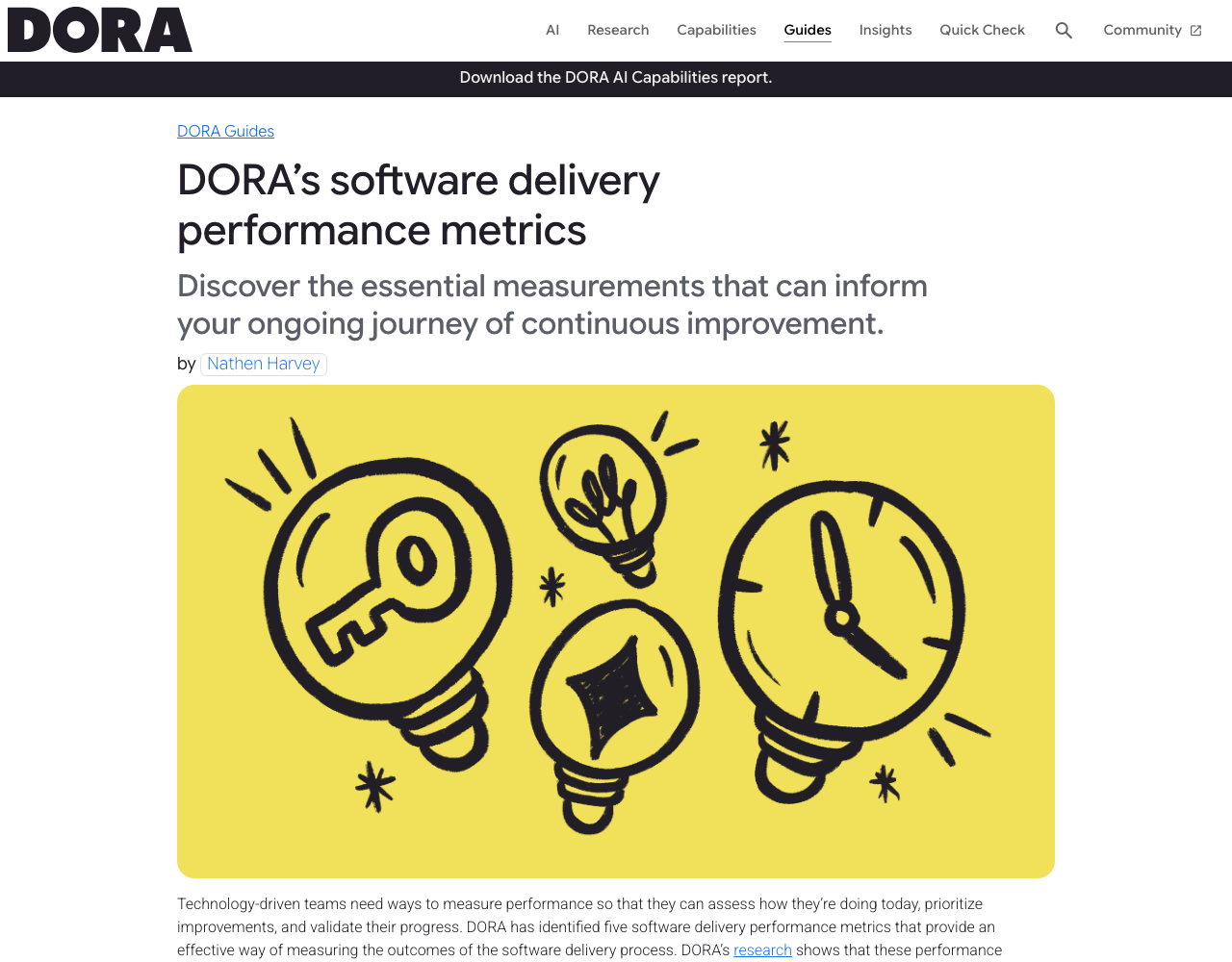
Elite performers use documentation to amplify other capabilities. The performance lift from trunk-based development, for instance, climbs from 36% to over 1500% when supported by high-quality docs.
Trunk-based development lives or dies on rapid context sharing and high-frequency commits, and both stall the moment an engineer in one time zone has to wait for the only person who understands a module to wake up in another.
| Metric | Impact of High-Quality Documentation |
|---|---|
| Software Delivery Performance | 2.4x more likely to be an elite performer |
| Security Integration | 3.8x higher success rate |
| Cloud Adoption | 2.5x more effectively utilized |
| Organizational Performance | 25% higher relative to low-doc peers |
Knowledge silos and the linear decay of throughput
A knowledge silo is an undocumented architectural detail that lives only in one engineer's head, the kind of thing you discover exists the first time you need it and that person is on vacation. Silos are the primary bottleneck in the modern engineering pipeline.
Throughput capacity is limited by the slowest component of the system, the same way an assembly line moves only as fast as its slowest station no matter how quick the others are. A deployment pipeline that takes 10 minutes means nothing if understanding the Auth Service dependencies first takes four hours of Slack interrogation.
Your real velocity is capped by the missing documentation, not the fast part you are proud of. Initiatives built around intentional knowledge sharing, such as Architecture Decision Records (ADRs), have been shown to boost engineering throughput by nearly 70%.
GitHub's State of the Octoverse reports consistently show that high-quality documentation can increase developer productivity by 50%. That gain comes from decentralizing the truth.
Once the documentation is the source of truth, the "Bus Factor" of any individual component matters less than the reliability of the written spec, because the spec does not take a new job.

Quantifying the context switching tax
Context switching is the most expensive operation in engineering. Every time an engineer leaves their IDE to hunt for an answer in Slack, Jira, or a wiki page that 404s, they pay a cognitive restart cost: the held stack of variable names, the half-built mental model of the bug, the thread they were three steps into all get dropped, and rebuilding that state after the detour can take far longer than the search itself.
High-quality documentation minimizes this tax by putting answers at the point of need. "Documentation as Code", where docs live in the same repository as the source, earns its keep for that reason.
Keeping the docs a few keystrokes from the code shortens the path between question and answer enough that the engineer never fully leaves flow state. According to Stack Overflow data, 48% of developers experience weekly productivity issues specifically due to knowledge silos and the resulting context switches.
The documentation-as-capability framework
Google Cloud's Architecture Framework identifies documentation not as a support asset, but as a core operational capability.
To achieve velocity gains, DORA research identifies eight key attributes of high-quality documentation that must be met:
- Clarity: Easy to understand for the intended audience.
- Findability: Answers are discoverable in under 60 seconds, which is one reason shorter technical documentation usually works better.
- Reliability: The information is technically accurate.
- Updateability: The friction to revise a doc is lower than the friction to ignore it.
- Relevance: Content is directly applicable to current workflows.
- Completeness: The entire public surface area is covered.
- Organization: Following structured frameworks like Diátaxis.
- Accessibility: Available to all stakeholders without permission silos.
Economic outcomes of documentation maturity
Finance teams tend to question the ROI of technical writing because it reads like a soft cost on a budget line. The outcomes, though, are quantifiable.
Support ticket deflection
High-quality documentation is a defensive asset. A good "how do I rotate the API key" page answered once in the docs is a question your senior engineers never field again in a support channel, which frees them for the architectural work only they can do.
That trade moves spend from Opex (maintenance) toward Capex (new feature value).
Onboarding velocity
The "Time to First Commit" for a new hire is a leading indicator of organizational health. Teams with elite documentation cut that time by 40-60%, which is why developer onboarding docs that actually work pay back so quickly.
Picture two new hires: one clones the repo, follows a working setup guide, and ships a small fix on day three, and the other spends that week pinging strangers to learn which environment variables the local server needs. Making the first scenario the default, in a competitive hiring market, is a real economic advantage.
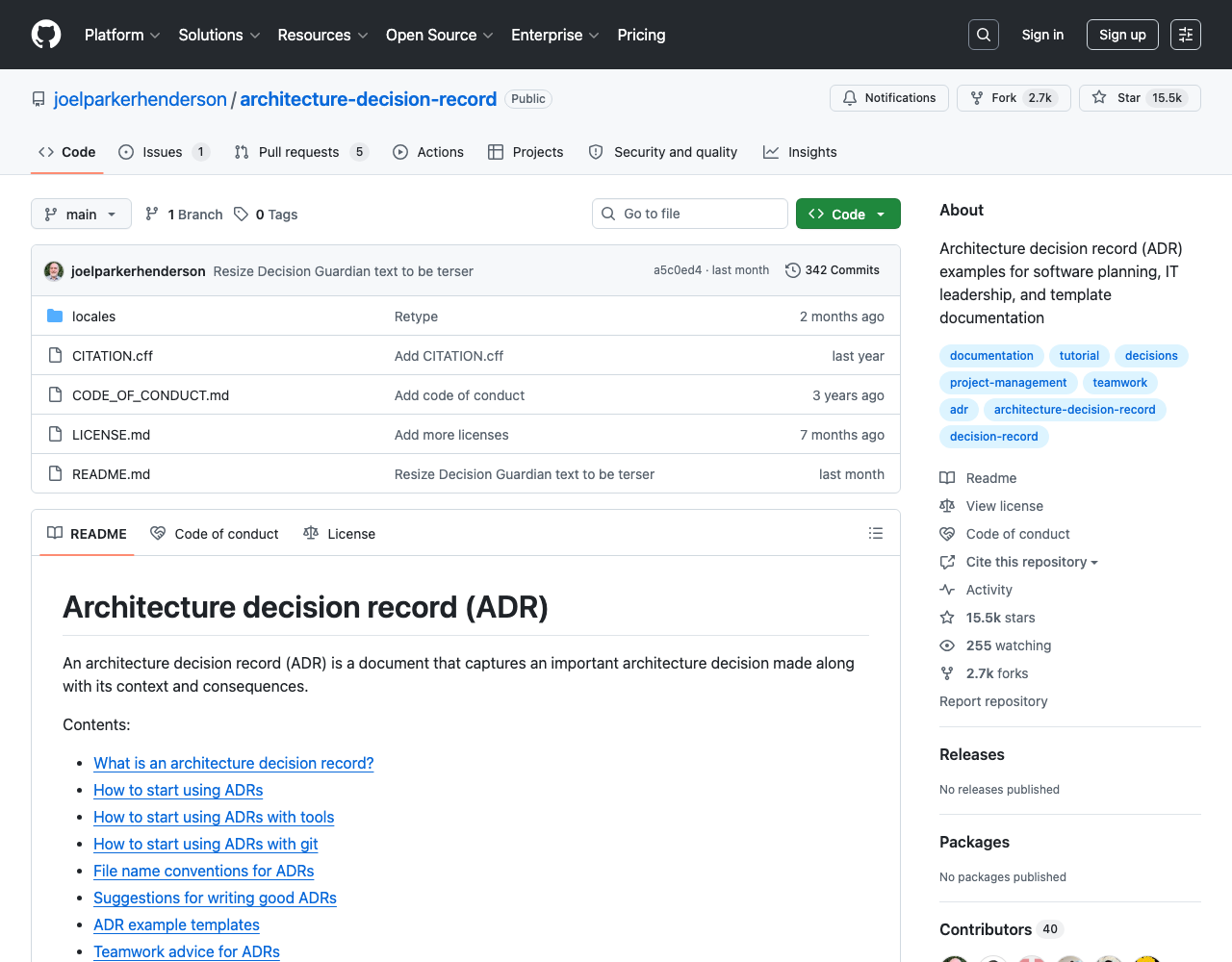
ADRs are a high-signal example of practitioner writing that outranks the standard wiki dump. They capture the "why" behind a decision, which stops a future engineer from "fixing" the deliberately blocking call in the payment flow that was made synchronous on purpose, then spending a week debugging the race condition their cleanup reintroduced.
Engineering documentation as infrastructure
Information architecture has become the primary competitive moat for developer-first companies in 2026, and Stripe's technical blog shows how that advantage compounds. Practitioners reward the teams that put writing on the product roadmap instead of leaving it for a quarter that never arrives.
When a doc lets a developer wire up your SDK in ten minutes instead of an afternoon, that page stops being content and starts being infrastructure. Deep practitioner writing earns a permanent spot in the trusted toolkit the way a reliable library does.
Useful content stays relevant for one reason: it does something for the reader the moment they land on it.
FAQ
How do we measure "documentation quality" objectively? Use the DORA attributes as a scorecard. Survey your engineers on "Time to Find Answer" and "Reliability of Source."
Correlate these scores with your DORA velocity metrics (Lead Time and Change Failure Rate).
Is "Documentation as Code" required for these gains? It is the most reliable way to keep documentation current. Treating docs like code, with PR reviews, linting, and automated testing, drops the "Updateability" friction that lets traditional wikis rot into a graveyard of half-true pages.
Should engineers write all the documentation? No. Technical writers bring the structural expertise and editorial discipline, and engineers still have to own the "Primary Source" truth.
The most effective teams I have seen run a hybrid model where engineers draft the technical core and writers shape it for clarity, findability, and the Diátaxis framework.
What is the "Bus Factor" impact of documentation? Documentation raises the Bus Factor by decentralizing tribal knowledge. Picture the one person who knows how the payment gateway actually works walking out with no docs behind them: your Bus Factor is 1, and a single resignation can stall a revenue-critical system.
High-quality docs move that knowledge from a person to the organization, where it cannot give two weeks' notice.
Does AI-generated documentation help velocity? Only when a human practitioner verifies it. AI handles boilerplate well, and the nonsense detector of technical readers fires fast on hallucinated details like a flag that never existed or a parameter the API does not accept.
Readers extend trust on the basis of accuracy, never volume.